Crocodiles
..can't stick out their tongues

Crocodiles and alligators have some external differences: shape of head, profile of teeth, etc. One of the more interesting differences is that a crocodile cannot stick out its tongue. Most reptiles use their tongue for swallowing (see alligator) or actually catching their prey (see chameleon). Crocs do neither with their tongues.
If a crocodile “kids” cannot stick out their tongues at siblings and do not use it for swallowing, why even have one? First, let’s cover *why* they cannot stick out their tongue. Surprisingly it is attached to the roof of their mouth. Yeah… how does that work? How do they even swallow if the tongue is anchored to the roof of their mouth? They have a “palatal valve”. This fleshy flap blocks their throat to keep out water.

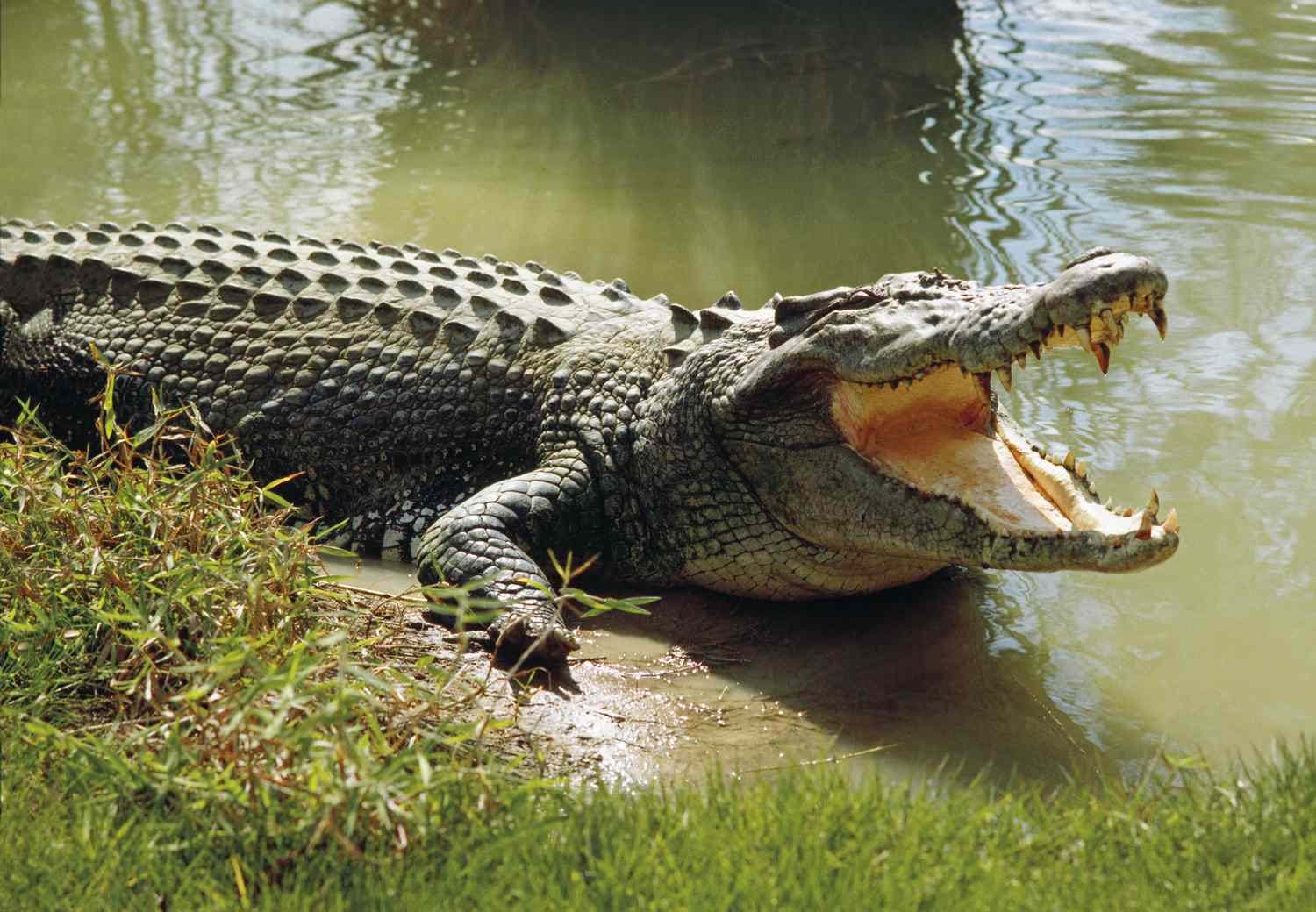
This is why crocodiles throw their heads back to eat prey. This assists in opening the palatal valve (which in the picture above shows the connection around the inside of the mouth, terminating at the roof). The tongue operates with the palatal valve to keep water out while hunting under water.
The crocodile tongue also has excretory glands to rid the body of excess salt. Crocodiles can live in extremely salty water. They can live in salty environments where alligators cannot. To keep from building up an excess of sodium and chloride ions, the crocodile dumps them out of their glands at the base of the tongue and then sneezes them out their nose.
The tongue is also used as a cooling mechanism. Since reptiles are cold blooded, they need to move to cooler or warmer parts of the environment to regulate body temperature. They can also use evaporative cooling with their tongue. That is why one will occasionally see crocodiles (and alligators) sunning with their mouths open.